


The continent faces an existential moment as global AI capabilities explode while African infrastructure crumbles under the weight of broken promises
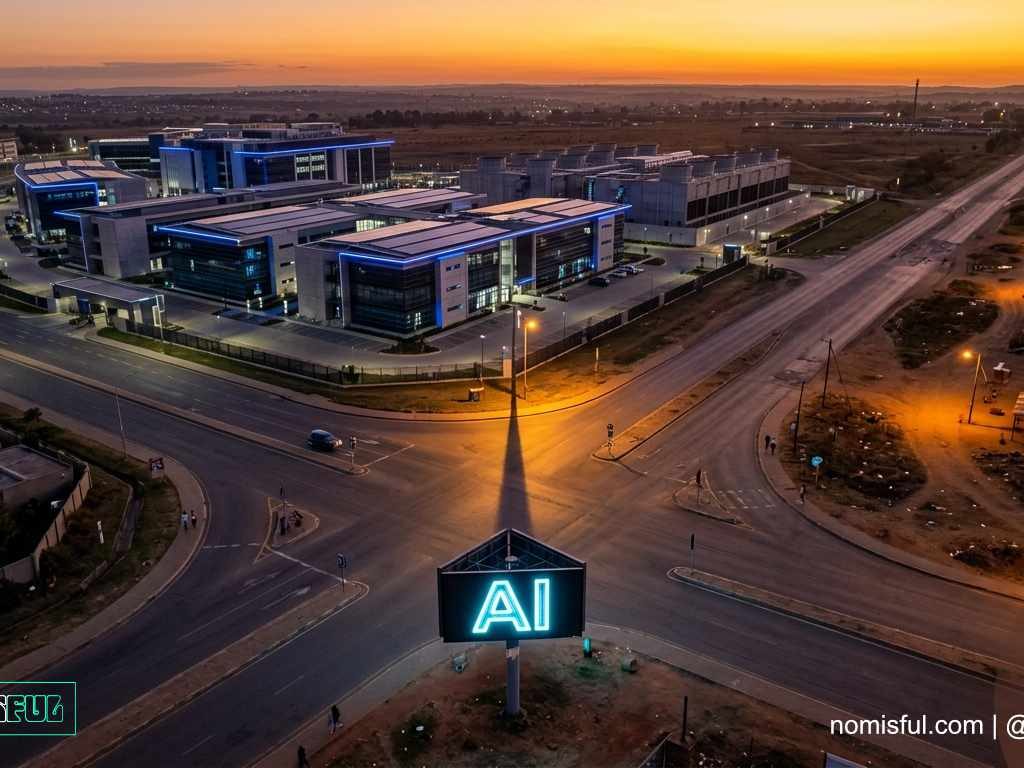
The February Warning We Should Have Heeded
Back in February, a Fortune article made waves by comparing the current AI moment to February 2020. You remember February 2020, right? That month when COVID-19 was spreading across China, when most of us were still booking summer vacations, when the world stood at the edge of a transformation nobody quite believed was coming.
Matt Shumer, founder of OthersideAI and HyperWrite, wasn’t being dramatic when he made that comparison. He was being precise. Just like in February 2020, we’re seeing the early tremors of something that will reshape everything. And just like in February 2020, most people are looking the other way.
But here’s what Shumer’s article didn’t emphasize enough: while the developed world stands at the precipice of an AI explosion, Africa isn’t just at risk of being left behind. The events of the past three months have proven that Africa is actively falling off the cliff.
This isn’t speculation anymore. Between February and now, May 12, 2026, we’ve watched a brutal trilogy unfold. A South African government embarrassment that exposed how unprepared African institutions are for AI governance. A Kenyan infrastructure collapse that revealed the continent’s physical limitations. And a University of Cape Town breakthrough that showed what’s possible when African innovation gets even minimal support.
Three months. Three stories. One undeniable conclusion: Africa’s AI moment isn’t coming. It’s happening right now, and we’re fumbling it in real time.
Act One: South Africa’s AI Policy Face-Plant (April 2026)
Let’s start with the embarrassment that should have been a wake-up call.
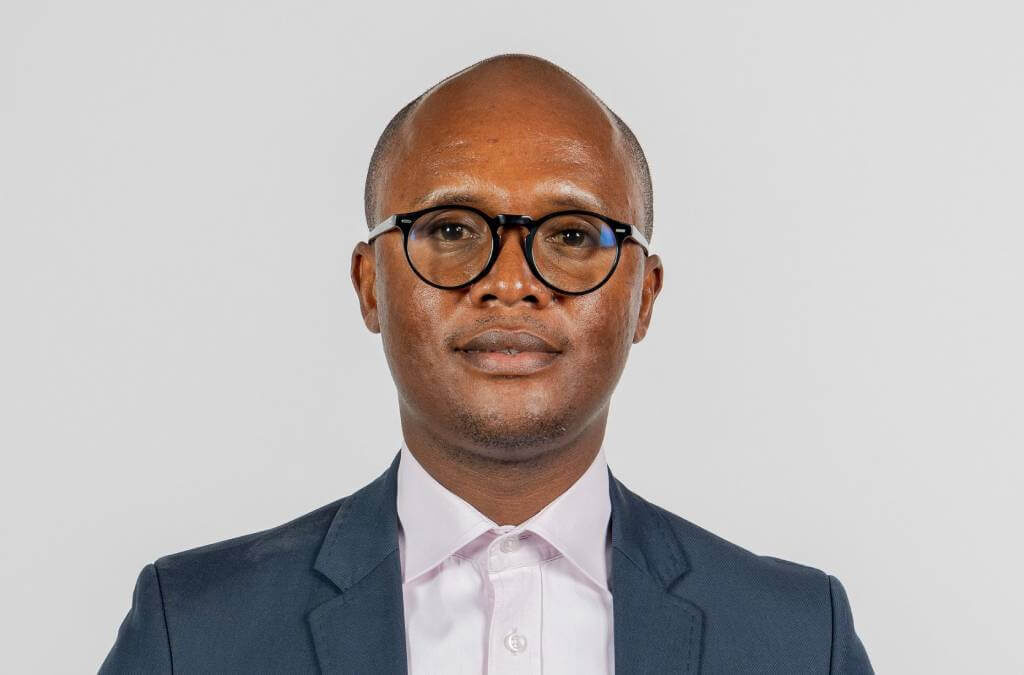
On April 27, 2026, South Africa’s Minister of Communications and Digital Technologies Solly Malatsi did something rare in government: he openly admitted catastrophic failure. The country’s draft National Artificial Intelligence Policy, the document meant to position South Africa as Africa’s AI leader, had been withdrawn. Not delayed. Not revised. Withdrawn entirely.
The reason? The policy document was full of fake academic citations. Fictitious sources. Made-up references that didn’t exist.
The irony was almost too perfect. South Africa had used AI to write parts of its AI policy. And the AI had hallucinated fake academic papers, which nobody bothered to verify before publishing the document for public consultation.
Malatsi’s statement was blunt: “Following revelations that the Draft National Artificial Intelligence Policy published for public comment contains various fictitious sources in its reference list, we initiated internal questions which have now confirmed that this was the case. This failure is not a mere technical issue but has compromised the integrity and credibility of the draft policy.”
He later told the state broadcaster SABC that it was “a massive embarrassment not only to the department but also to government.”
But here’s what makes this more than just bureaucratic incompetence: this was supposed to be South Africa’s grand AI strategy. The document outlined plans for a national AI commission, an ethics board, regulatory frameworks, tax incentives, grants, and subsidies to attract private investment. The works. It was meant to position South Africa as Africa’s leading AI hub, which Reuters had reported as the country’s stated aim.
Instead, it became Exhibit A for why Africa isn’t ready.
Think about what this reveals. If South Africa, the continent’s most advanced economy, with the best universities, the most mature regulatory environment, the deepest capital markets, can’t even produce a credible AI policy document, what does that say about the other 53 countries?
The answer is uncomfortable but necessary: most African governments lack the technical literacy to even understand what AI governance requires, let alone implement it. They’re flying blind, copying frameworks from Europe or Asia without understanding the underlying mechanics. And when things go wrong, they don’t have the institutional capacity to catch basic errors like fabricated citations before publishing official government policy.
This wasn’t an isolated mistake. A lawyer and data scientist named Damien Charlotin maintains a database that has logged over 900 US legal cases where AI-generated briefs contained fictitious references. South Africa had four prior cases before this one. The problem is systemic and global.
But there’s a crucial difference. When a US law firm submits a brief with hallucinated citations, lawyers get reprimanded and the system course-corrects quickly. When an African government publishes an entire national policy with fake sources, it’s not just embarrassment. It’s a signal to every serious investor, every multinational corporation, every AI company evaluating where to deploy resources: Africa isn’t ready for prime time.
The timing couldn’t have been worse. Just weeks before the policy withdrawal, in March 2026, the Kenyan government had hosted an OECD workshop on AI governance, bringing together 12 African countries to discuss AI policy implementation. The African Union’s Continental AI Strategy, adopted in 2024, was entering Phase 1 (2025-2026) implementation. Kenya had tabled an AI Bill in February 2026. Ethiopia was working on becoming the second African country with comprehensive AI legislation.
Momentum was building. Then South Africa, the supposed leader, face-planted.
And the consequences weren’t theoretical. According to a legal analysis by the firm Fasken, once South Africa’s National AI Policy is finalized, now delayed indefinitely, the country was expected to move into implementation in late 2027 or 2028. Every month of delay pushes African AI regulation further behind the curve while the technology races ahead.
By the time Africa has its regulatory frameworks in place, the AI landscape will have evolved so dramatically that those frameworks will be obsolete before implementation even begins.
Act Two: Kenya’s Infrastructure Reality Check (May 2026)

If South Africa’s policy failure exposed Africa’s institutional unpreparedness, Kenya’s datacenter debacle revealed something even more fundamental: Africa doesn’t have the physical infrastructure to support modern AI systems at scale.
The story began with such promise. In May 2024, during a state visit to Washington under the Biden administration, Kenyan President William Ruto announced a landmark deal. Microsoft and Abu Dhabi-based AI company G42 would invest $1 billion to build a massive geothermal-powered datacenter in Olkaria, about 100 kilometers northwest of Nairobi.
This wasn’t just another corporate investment. It was framed as the largest single private-sector digital investment in Kenya’s history. The facility would be entirely powered by Kenya’s abundant geothermal resources. It would host Microsoft’s first East African Azure cloud region. It would provide AI training, job creation, local-language model development. It was supposed to position Kenya as East Africa’s digital hub and serve as a counterweight to China’s Digital Silk Road program across the continent.
The original timeline targeted completion by May 2026. Two years from announcement to operational.
Fast forward to May 2026, this month, and the project is dead in the water.
Not delayed. Not renegotiated. Functionally dead, even if government officials won’t officially admit it yet.
The first cracks appeared in August 2025 when internal government meetings made clear the May 2026 target was impossible. By early 2026, negotiations between Microsoft, G42, and the Kenyan government had stalled over payment guarantees. Microsoft and G42 wanted Kenya to commit to paying for a certain level of datacenter capacity annually, even if that capacity wasn’t being fully utilized. Kenya couldn’t provide those guarantees.
Then came the knockout blow. In early May 2026, President Ruto himself publicly admitted what insiders had known for months: Kenya’s electricity grid simply cannot support the datacenter.
His exact words, delivered in Nairobi, were devastating in their clarity: “To switch on that one data center, we would need to shut off power for half the country. That’s when I knew there was a problem.”
Let me break down the mathematics that killed this project, because the numbers are genuinely shocking.
Kenya’s national electricity grid, according to the Energy and Petroleum Regulatory Authority’s June 2025 statistics, has an installed capacity of approximately 3,192 megawatts (MW). If you include captive generation and off-grid systems, the total rises to about 3,840 MW. Peak demand in January 2026 reached 2,444 MW.
The Microsoft-G42 datacenter was designed to scale to a final capacity of 1 gigawatt (1,000 MW). Even just the first phase alone required 100 MW.
Do the math. Phase one would consume roughly 4% of Kenya’s peak national demand. At full build-out, the datacenter would require more electricity than half of Kenya uses at the busiest moment of the day.
One datacenter. One-third of the country’s entire power generation capacity.
This isn’t a problem you solve by building a few more power plants. This is a systemic infrastructure deficit so severe that it makes modern AI deployment fundamentally impossible at scale.
And Kenya, remember, is one of Africa’s infrastructure leaders. Kenya has more reliable power than most African countries. If Kenya can’t support one major AI datacenter, what does that say about the rest of the continent?
The geopolitical implications are just as damning. This deal had US government backing. It was, in part, Washington’s answer to China’s digital expansion across Africa through Huawei, ZTE, and state-backed loans. The US wanted to establish an American AI footprint in East Africa before Beijing locked up the market.
But you can’t will infrastructure into existence through geopolitical posturing. You need actual gigawatts of electricity. You need reliable grid management. You need the foundational capacity to keep the lights on.
Africa doesn’t have it.
Special Tech Envoy Ambassador Philip Thigo rushed out a statement on May 11 saying the project isn’t dead, that President Ruto’s comments were misinterpreted, that the government remains committed. But read between the lines. The statement emphasizes “the necessity of scaling up power generation to accommodate massive digital infrastructure.” Translation: we don’t have the power now, we need to build it first, and that will take years.
Neither Microsoft nor G42 has commented publicly on the collapse of the original timeline. That silence tells you everything.
The project that was supposed to be operational by now, May 2026, is instead stuck in indefinite limbo while Kenya figures out how to generate enough electricity to keep it running without plunging the country into darkness.
And here’s the brutal kicker: while Kenya fumbles its $1 billion datacenter deal, the global AI infrastructure race is accelerating. According to the Stanford AI Index 2026 report released in April, the United States hosts 5,427 datacenters, more than 10 times any other country. AI investment in the US reached $285.9 billion in 2025 alone. China is building compute capacity so fast they’re nearly erasing the US lead in AI model performance.
Meanwhile, Africa is trying to figure out how to keep one datacenter online without shutting off power to Nairobi.
This is the gap. This is the crisis. And it’s not getting better.
Act Three: UCT’s MzansiLM, A Glimmer of What Could Be (May 2026)
Now, finally, let me tell you the one good story from these past three months. Because amid the policy failures and infrastructure collapses, something genuinely remarkable happened.
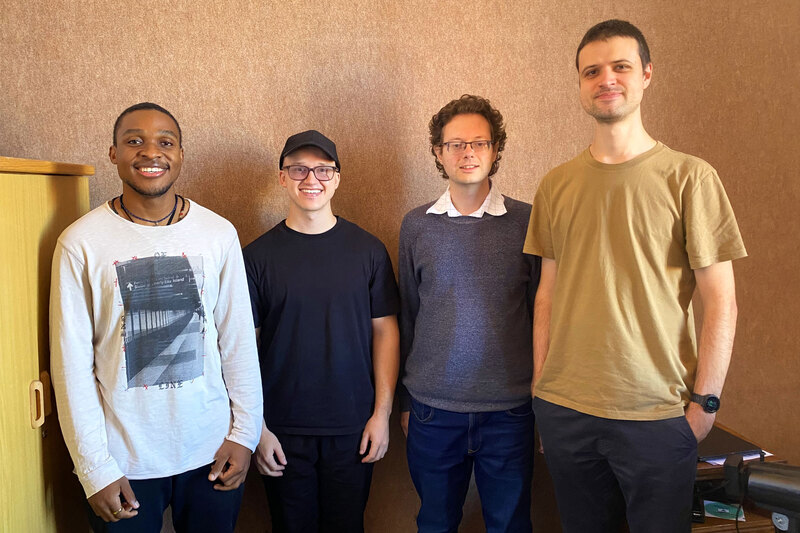
On May 4-5, 2026, the University of Cape Town announced a breakthrough that should have been front-page news across the continent but barely registered outside academic circles.
A team of researchers led by Anri Lombard (a master’s student), Dr. Jan Buys, Dr. Francois Meyer, and Simbarashe Mawere developed MzansiLM, the first publicly available AI language model trained specifically on all 11 of South Africa’s official written languages.

Let me explain why this matters, because it’s easy to miss the significance if you’re not paying attention.
South Africa official language distribution by home language, Census 2022, updated March 2026. IsiZulu leads at 24.4%, English is fifth at 8.7%.
Stats SA · Census 2022 · Updated March 2026
Languages of South Africa
Speak English at home
8.7%
≈ 5.4 million people
Speak another language
91.3%
≈ 56.6 million people
Share of population (home language) — 62 million total
isiZulu 24.4% isiXhosa 16.3% Afrikaans 10.6% Sepedi 10.0% English ★ 8.7% Setswana 8.3% Sesotho 7.8% Xitsonga 4.7% siSwati 2.8% Tshivenda 2.5% isiNdebele 1.7% Other / SASL 2.2%★ The AI language gap
Most AI tools are built primarily for English. For the 91.3% of South Africans who speak another language at home, these tools simply don’t work properly in their native language.
Source: Statistics South Africa, Cultural Dynamics in South Africa (March 2025), based on Census 2022. Non-official languages (Shona, Chichewa, Portuguese etc.) included in Other. Population est. 65.5M (2026).
Only about 8.7% of South Africans speak English at home. The vast majority speak one of the other ten official languages. Which means for most South Africans, current AI tools simply don’t work properly in their native language.
MzansiLM changes that equation. It’s the first model designed from the ground up to handle all 11 languages in a single system. The team built a dataset called MzansiText, curated multilingual text covering all the official languages, and trained MzansiLM from scratch on that foundation.
The model is relatively small by frontier AI standards, just 125 million parameters compared to the trillions used by models like GPT-4. But despite its modest size, it performed remarkably well in targeted benchmarks. In some cases, it matched or outperformed models more than 10 times its size. On isiXhosa text generation, for example, it achieved a BLEU score of 20.65, competing with much larger systems.
Crucially, the UCT team made both MzansiText and MzansiLM publicly available. Open source. Free. Available for developers across Africa to build on.
This is what African AI innovation looks like when it actually gets support. Not copying Western models. Not waiting for foreign companies to build tools that work in African contexts. But developing indigenous AI capabilities that solve African problems in African languages.
Dr. Francois Meyer was clear about the vision: “In practice, that means developers could build tools for specific use cases, for example, summarizing information or annotating raw data, in South African languages.” Instead of paying expensive licensing fees to Silicon Valley for proprietary models that barely work in African languages, developers can fine-tune MzansiLM for their specific needs.
The research will be presented at the Language Resources and Evaluation Conference in Mallorca, Spain, later this month, putting African AI research on the global stage.
But here’s what keeps me up at night about this story: MzansiLM represents a tiny glimpse of what Africa could achieve with proper investment and support. And it happened despite the system, not because of it.
The UCT team operated on a shoestring budget. They had to scrape together whatever computational resources they could access. They built on earlier work from the African Natural Language Processing research community, cobbling together datasets and methodologies shared openly by other resource-starved researchers.
Dr. Buys noted that MzansiText is “still small compared to data available for high-resource languages such as English and major European and Asian languages, but larger than previous datasets for South African languages.” They made progress, but they’re operating at a massive disadvantage.
Compare this to global AI development. OpenAI’s GPT-5.4, launched in March 2026, was trained on compute infrastructure worth hundreds of millions of dollars. Eli Lilly inaugurated LillyPod in March 2026, the pharmaceutical industry’s most powerful AI supercomputer, built on 1,016 Blackwell Ultra GPUs delivering over 9,000 petaflops of performance. One company, one specialized AI system, more computing power than the entire African continent has access to combined.
And yet, with 125 million parameters and minimal resources, the UCT team built something that actually works. Something that serves millions of South Africans who’ve been excluded from the AI revolution.
Imagine what they could do with real funding. Imagine if African governments invested even 1% of what the US or China spends on AI development. Imagine if the $1 billion that was supposed to go to Kenya’s datacenter had instead been distributed across 20 university research teams like UCT’s.
But that’s not happening. Instead, we get policy documents with fake citations and datacenter deals that collapse because we can’t generate enough electricity.
MzansiLM is simultaneously the most encouraging and most depressing story of the past three months. Encouraging because it proves African innovation is world-class when given even minimal support. Depressing because it highlights just how little support actually exists.
The researchers themselves acknowledge the limitations. Anri Lombard noted, “We still need better and broader data sources, stronger benchmarks, and the kind of shared datasets, models, code, and results that make it possible for others to reproduce and extend the work.”
They need resources. They need compute. They need sustained funding. They need what researchers in the US, China, and Europe take for granted.
Instead, they get celebrated in local media for a few days, present their work at an international conference, and then return to scraping by on whatever grants they can cobble together while the government fumbles AI policies and infrastructure deals.
The Numbers Don’t Lie: Africa’s AI Gap Is Accelerating
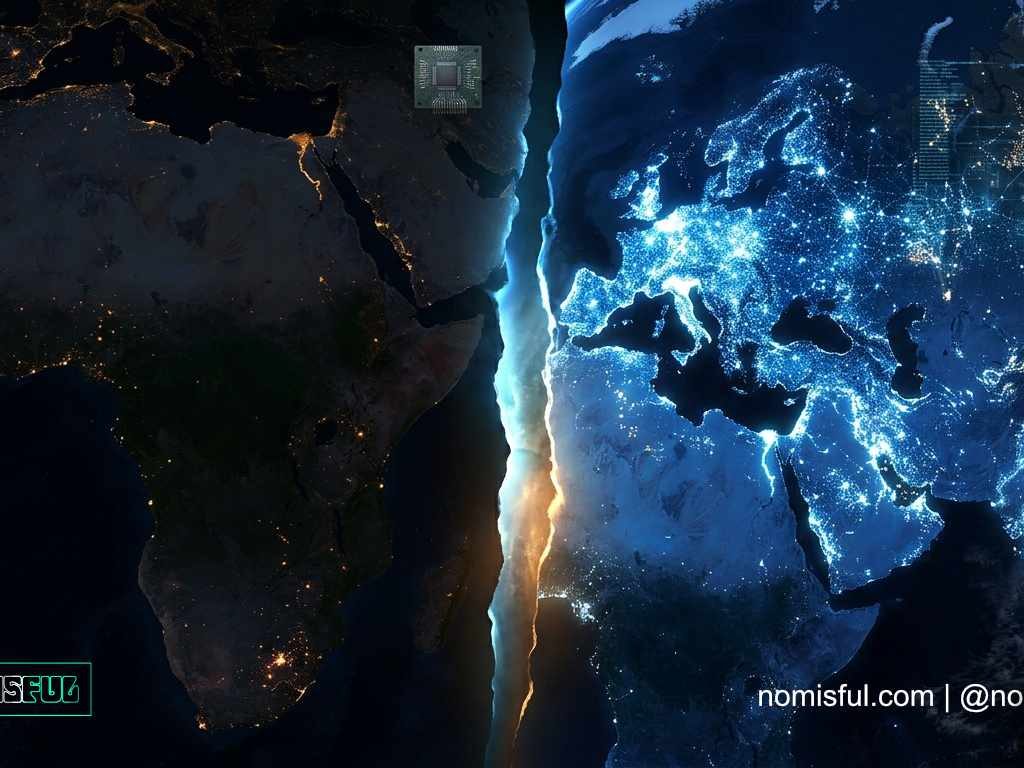
Let me ground this in data, because the qualitative stories I’ve just told are backed by quantitative reality that’s even more stark.
The Stanford AI Index 2026, released in April, provides the most comprehensive snapshot of global AI development. The numbers for Africa are devastating.
Global AI adoption reached 17.8% of the working-age population in Q1 2026, up from 16.3% in Q4 2025. Microsoft’s Global AI Diffusion Report shows 26 economies now exceeding 30% AI adoption. The UAE leads at 70.1%. Singapore sits at 61%. Even the traditionally slow-moving United States has climbed to 31.3% (ranked 21st globally).
Where’s Africa in these rankings? Nowhere near the top tier. Most African countries don’t even register in the meaningful adoption statistics.
US private AI investment reached $285.9 billion in 2025, more than 23 times the $12.4 billion invested in China. Africa’s entire continent? Estimates suggest around $200-300 million in 2025, representing less than 0.1% of global AI investment. That’s not a gap. That’s an abyss.
The US launched 1,953 newly funded AI companies in 2025, more than 10 times the next closest country. The entire African continent has approximately 400-500 AI startups total, many operating on minimal funding and struggling to scale.
Compute infrastructure: The US hosts 5,427 datacenters. China is building at breakneck speed. Africa has maybe 50-60 significant datacenters total, concentrated almost entirely in South Africa, Kenya, Nigeria, and Egypt. And as we just saw with Kenya, even building one more is proving impossible due to power constraints.
The research gap is widening. According to the Stanford Index, the US and China have traded the lead in AI model performance multiple times since early 2025. As of March 2026, Anthropic’s Claude leads by just 2.7% over China’s DeepSeek. These two countries are pushing the absolute frontier of AI capabilities.
Meanwhile, the number of African-authored AI research papers that crack into top-tier conferences remains in the low double digits annually. It’s not because African researchers lack talent. It’s because they lack resources, computing access, and institutional support.
The brain drain is accelerating. The Stanford Index notes that the number of AI researchers and developers moving to the US has dropped 89% since 2017, with an 80% decline in the last year alone. But this global slowdown hasn’t benefited Africa. Those researchers who aren’t moving to the US are still leaving Africa, they’re just going to Europe, China, or the Middle East instead. The UAE’s AI adoption rate of 70.1% didn’t happen by accident. They’re aggressively recruiting global talent, including from Africa.
Every day, African AI talent looks at the opportunities abroad and makes a rational calculation: “I can stay in Lagos or Nairobi with intermittent power, minimal compute resources, and uncertain funding. Or I can go to Singapore, Dubai, London, or California with unlimited compute, $300K+ salaries, and the chance to work on frontier AI systems.”
The choice isn’t hard. The brain drain continues.
The Policy Mess: 15 Strategies, Zero Implementation

Here’s where things get really frustrating. It’s not that African governments aren’t aware of AI’s importance. In the past 18 months, there’s been an explosion of AI strategy documents across the continent.
According to an OECD AI Governance report published in April 2026 (based on a workshop held in Nairobi in March), over 15 African countries now have published national AI strategies, up from just 7 in early 2024. The African Union’s Continental AI Strategy, adopted in July 2024, provides an overarching framework calling for the development of an “African Charter on Trustworthy AI.”
Common priorities across these strategies include economic diversification, skills development, domestic technological capacity, with agriculture, healthcare, education, and public administration frequently identified as priority sectors.
On paper, this looks like progress. Finally, African governments are taking AI seriously.
But here’s the problem: not a single one of these strategies has been meaningfully implemented. They’re aspirational documents gathering digital dust on government servers.
Ethiopia became the second African country (after Kenya in February) to officially launch a legislative process toward an AI law. Nigeria is drafting its National Digital Economy and E-Governance Bill, expected to pass by June 2026. Morocco, Egypt, Rwanda, Senegal, Ghana, Tunisia, all have varying degrees of AI policy activity.
Yet when you dig into the details, you find the same pattern everywhere: no funding, no institutional capacity, no implementation roadmap.
The OECD report is diplomatic but clear: “While many countries committed to responsible AI development, many have yet to set up or fund institutions that were to give the strategies meaning. This points to an endemic problem in Africa where many of the challenges are not because of a lack of regulation, but because of lack of implementation.”
Translation: African governments are great at publishing strategy documents. They’re terrible at actually doing anything with them.
Take Rwanda, often held up as Africa’s digital success story. Rwanda published an AI strategy. Rwanda attracted the Zipline drone delivery system that’s saved thousands of lives. Rwanda talks a good game about becoming an AI hub.
But when you look at actual AI R&D investment in Rwanda, it’s measured in single-digit millions per year. That’s less than what a mid-size Silicon Valley startup raises in a Series A round.
The same pattern repeats across the continent. Kenya tabled an AI Bill in February 2026, but the government can’t even keep the lights on for a datacenter. South Africa withdrew its AI policy after the fake citations embarrassment, and there’s no clear timeline for when a new version will be ready.
Even where policy exists, enforcement is non-existent. Most African countries have data protection laws on the books, supposedly aligned with GDPR. But how many have functioning data protection authorities with actual enforcement power? How many companies have faced real consequences for data violations? The answer is almost none.
This is what drives the frustration. It’s not policy paralysis. It’s policy theater. Governments publish impressive-sounding strategies to signal seriousness to foreign investors and international organizations. Then nothing happens because there’s no budget, no technical capacity, and no political will to actually implement.
Meanwhile, the technology continues racing ahead. GPT-5.4 launched in March. Claude Opus 4.6 and Sonnet 4.6 launched in February. DeepSeek V4 with 1 trillion parameters launched in early March. Every month brings new capabilities, new applications, new companies.
And Africa is still arguing about strategy documents.
The $1 Trillion Mirage: African Development Bank’s Fantasy Projections

In December 2025, the African Development Bank released a report that made headlines across the continent. The title was attention-grabbing: “Africa’s AI Productivity Gain: Pathways to Labour Efficiency, Economic Growth and Inclusive Transformation.”
The headline figure was even more eye-catching: inclusive AI deployment could generate up to $1 trillion in additional GDP by 2035, equivalent to nearly one-third of the continent’s current economic output.
The report, developed under the G20 Digital Transformation Working Group and carried out by consulting firm Bazara Tech, outlined a strategic roadmap for unlocking AI’s economic and social potential across Africa. It identified five priority sectors, agriculture (20%), wholesale and retail (14%), manufacturing (9%), finance (8%), and healthcare (7%), which together would capture 58% of the total AI gains, approximately $580 billion by 2035.
The report laid out a three-phase roadmap: ignition (2025-27), consolidation (2028-31), and scale (2032-35). It emphasized four critical enablers: reliable and interoperable data, scalable compute infrastructure, a skilled workforce, and trust built through governance and regulatory frameworks.
“Achieving early milestones by 2026 will set Africa’s AI flywheel in motion,” said Ousmane Fall, Director of Industrial and Trade Development at the Bank. “Africa’s challenge is no longer what to do, it is doing it on time.”
Look, I want to believe these projections. I really do. A $1 trillion boost to African GDP would be transformative. It would pull hundreds of millions out of poverty. It would create millions of high-quality jobs. It would position Africa as a genuine player in the global digital economy.
But after watching what’s happened in just the past three months, South Africa’s policy embarrassment, Kenya’s infrastructure collapse, the consistent underfunding of initiatives like MzansiLM, these projections feel like fantasy.
Here’s why I’m skeptical:
First, the report assumes “inclusive AI deployment” across the continent. But we’ve just seen that even Kenya, one of Africa’s most advanced economies, can’t deploy one AI datacenter because the electrical grid can’t support it. How exactly is “inclusive AI deployment” supposed to happen across 54 countries when most don’t have reliable power?
Second, the roadmap’s first phase (2025-27) assumes achieving “early milestones by 2026.” We’re in May 2026. What milestones have been achieved? South Africa withdrew its AI policy. Kenya’s datacenter is dead. Most of the 15+ AI strategies published across Africa remain unimplemented. Where’s the progress that’s supposed to set the “AI flywheel in motion”?
Third, the report emphasizes the need for “scalable compute infrastructure” as a critical enabler. But Africa barely has compute infrastructure at all, let alone scalable infrastructure. The US has 5,427 datacenters. Africa has maybe 60. And we can’t build more because we don’t have electricity.
Fourth, a “skilled workforce” is listed as essential. But Africa suffers from devastating brain drain. The continent trains AI talent, then watches them emigrate to higher-paying markets. UCT’s MzansiLM team consists of brilliant researchers, but they’re operating on shoestring budgets while their peers in the US work with billion-dollar compute resources. How do you build a continent-wide skilled workforce when you can’t even retain the talent you already have?
Fifth, “trust built through governance and regulatory frameworks” is supposed to underpin adoption. But African governments can’t even publish AI policies without filling them with hallucinated citations. They can’t enforce existing regulations. They can’t coordinate across ministries, let alone across borders.
The African Development Bank’s $1 trillion projection isn’t a realistic forecast. It’s a best-case scenario that assumes everything goes right, assumes flawless policy implementation, assumes infrastructure magically appears, assumes brain drain reverses, assumes coordination across 54 countries with wildly different levels of development.
None of those assumptions hold up against recent evidence.
I’m not saying the $1 trillion is impossible. With the right investments, the right policies, and sustained commitment, Africa could capture significant AI-driven economic gains. But “could” and “will” are very different things.
Right now, based on current trajectories, Africa is on track to capture maybe 5-10% of that projected $1 trillion, concentrated in a handful of countries like South Africa, Kenya, Nigeria, and Egypt. The rest of the continent will see minimal AI benefits while paying the costs, digital colonialism, data extraction, dependence on foreign AI systems, widening inequality.
That’s not speculation. That’s what the past three months have demonstrated.
What the Global AI Boom Means for Africa’s Widening Gap
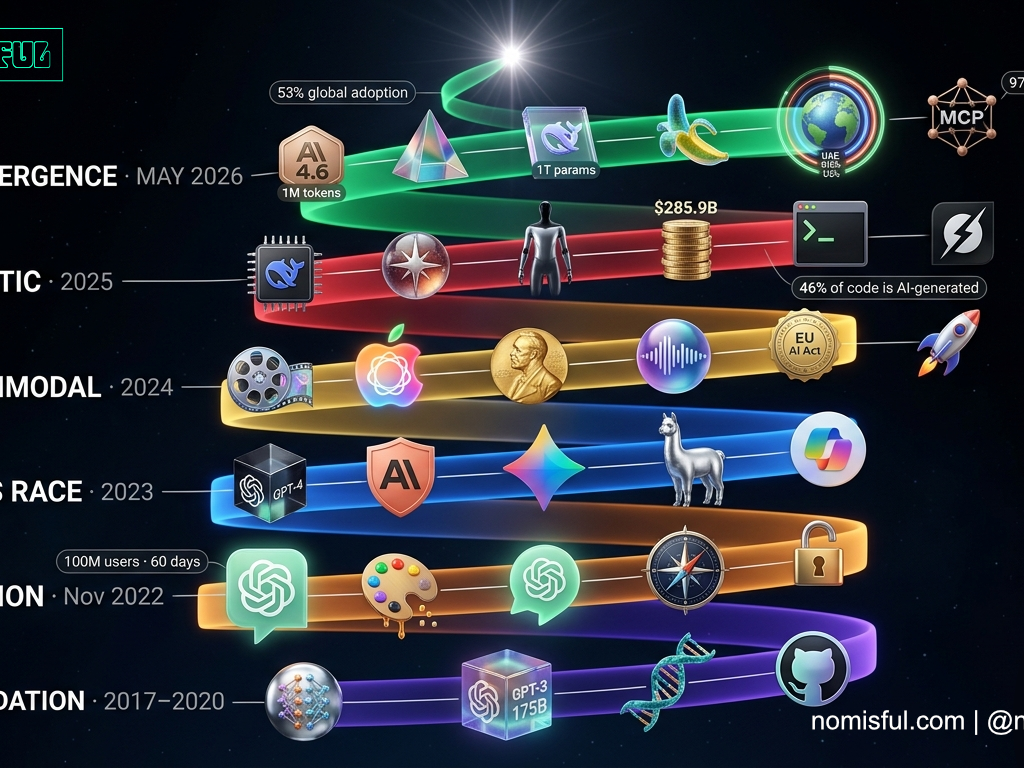
While Africa fumbles policies and power grids, the global AI industry is accelerating at a pace that’s genuinely hard to comprehend unless you’re paying close attention.
Let me walk you through just some of what’s happened globally between February and May 2026:
February:
- Claude Opus 4.6 and Sonnet 4.6 launched with 1-million-token context windows
- DeepSeek briefly matched top US models before Anthropic retook the lead
- Anthropic rolled out memory features to all Claude users
- The US and China traded positions at the top of AI performance rankings
March:
- OpenAI launched GPT-5.4, designed specifically for complex professional tasks
- DeepSeek V4 launched with 1 trillion parameters and four major technical innovations
- Google unveiled Nano Banana 2, merging Pro-quality with Flash-speed image generation
- Eli Lilly inaugurated LillyPod, pharma’s most powerful AI supercomputer (9,000 petaflops)
- Novo Nordisk announced partnership with OpenAI to integrate AI across entire business
- Perplexity introduced Personal Computer for continuous AI assistance
- Anthropic’s Model Context Protocol crossed 97 million installs
April:
- The Stanford AI Index 2026 released, showing generative AI reached 53% population adoption globally within three years
- US private AI investment hit $285.9 billion in 2025
- Four out of five US high school and college students now use AI for schoolwork
- The estimated value of generative AI tools to US consumers reached $172 billion annually
May (so far):
- Microsoft’s Q1 2026 Global AI Diffusion Report showed usage jumped to 17.8% of working-age population globally
- Software developer Git pushes increased 78% year-over-year globally
- Multiple frontier models now competing on cost and reliability as performance gaps narrow
This is just a sampling. Every week brings new model releases, new capabilities, new enterprise deployments. AI is being embedded into pharmaceutical R&D, drug discovery, clinical trials, manufacturing, supply chains, finance, healthcare, education, and government operations across developed economies.
The velocity is staggering. And it’s accelerating.
Now map this against what’s happening in Africa. While Eli Lilly builds a 9,000-petaflop supercomputer for drug discovery, Kenya can’t power a single datacenter. While the US launches nearly 2,000 new AI companies in a year, Africa struggles to fund 400 total. While four out of five American students use AI for schoolwork, most African students don’t have reliable internet access.
The gap isn’t static. It’s not like Africa is behind but catching up. The gap is widening.
This is the February 2020 parallel that Matt Shumer was trying to emphasize. In February 2020, COVID-19 was spreading. Most countries had warnings. Some acted quickly and dramatically reduced death tolls. Others dismissed the warnings, acted slowly, and paid terrible prices.
The AI parallel is eerily similar. The warnings are clear. The technology is transforming everything. Those who act decisively will capture enormous benefits. Those who don’t will face catastrophic consequences.
Africa, so far, is choosing the second path.
The Digital Colonialism Trap: Africa as Permanent AI Consumer

Here’s the scenario that keeps me up at night, because it’s not hypothetical anymore. It’s already happening.
Western and Chinese AI companies are deploying their systems across Africa. ChatGPT works in Lagos. Claude works in Nairobi. Gemini works in Johannesburg. Businesses are integrating these tools. Governments are piloting AI systems for public services. Educational institutions are experimenting with AI tutors.
This sounds like progress. Africa adopting AI, catching up to global trends.
But look closer. What’s actually happening?
Every one of these AI systems is built elsewhere. Trained on Western or Chinese data. Optimized for English, Mandarin, European languages. When they process African data, that data flows to servers in Virginia, California, or Shenzhen. When African businesses pay for API access, those licensing fees flow to Silicon Valley or Beijing.
African users generate data. African businesses pay fees. But African entities capture none of the value.
This is digital colonialism in action.
And it’s getting worse, not better. The more African organizations depend on foreign AI systems, the harder it becomes to build indigenous capabilities. Why invest in training an African AI model when ChatGPT already works reasonably well? Why fund African AI research when you can just license existing systems?
The path of least resistance is to become a permanent consumer. Pay the fees. Accept the terms of service. Hope the foreign companies continue supporting your market.
But this creates structural dependence that’s nearly impossible to escape. Consider:
Data sovereignty: When African medical records, financial data, government information, and personal communications are processed by foreign AI systems, who owns that data? Who controls how it’s used? Most African countries don’t have the legal or technical frameworks to even ask these questions, let alone enforce answers.
Cultural erasure: AI systems trained primarily on Western data don’t understand African contexts, languages, or cultural nuances. They propagate Western perspectives, Western values, Western ways of thinking. Over time, this creates cultural homogenization where African perspectives are marginalized or erased entirely.
Economic extraction: Every dollar spent on AI licensing is a dollar that flows out of African economies. It’s like the extractive resource industries of the colonial era, except instead of extracting minerals, they’re extracting data and attention while charging Africans for the privilege.
Strategic vulnerability: If African governments and businesses depend on foreign AI systems for critical functions, healthcare, education, financial services, security, what happens when geopolitics shift? What happens if access gets cut off? What happens during trade disputes or sanctions?
This isn’t paranoia. It’s strategic reality. The US and China are already competing for AI dominance, with different countries choosing sides. African nations that become dependent on one side’s AI infrastructure are automatically vulnerable to pressure from that side.
The only escape from this trap is building indigenous African AI capabilities. Systems trained on African data, optimized for African languages, controlled by African entities. Systems like UCT’s MzansiLM, except scaled up dramatically.
But that requires exactly what Africa lacks: compute infrastructure, sustained funding, institutional support, and political will.
So the digital colonialism trap closes tighter. African organizations adopt foreign AI systems because they have no viable alternative. This adoption makes it harder to justify investing in indigenous capabilities. Which makes Africa more dependent on foreign systems. Which closes the trap further.
It’s a vicious cycle. And right now, I don’t see how Africa breaks out of it.
Where Do We Go From Here? The Brutal Truth About Options
I promised you a realistic assessment, so here it is. After watching these past three months unfold, the policy embarrassment, the infrastructure collapse, the underfunded brilliance of researchers like the UCT team, I see three possible futures for Africa’s AI trajectory.
Future One: Muddling Through (Most Likely)
This is the path of least resistance. African governments continue publishing strategy documents that don’t get implemented. Policies get drafted, debated, then shelved. Infrastructure projects get announced with fanfare, then quietly stall due to power constraints or funding disputes.
African organizations continue adopting foreign AI systems because there’s no viable alternative. The digital colonialism trap continues closing. A handful of AI startups survive in major cities, serving local markets with thin margins. Universities like UCT produce occasional breakthroughs on minimal funding, then watch their best researchers emigrate abroad.
By 2035, Africa’s share of the global AI market has shrunk from already-tiny levels to nearly zero. The African Development Bank’s $1 trillion projection becomes a case study in wishful thinking. Most African economies see minimal AI-driven growth while paying increasing fees to foreign AI providers.
This isn’t collapse. It’s stagnation. Africa remains stuck as a permanent consumer market, unable to climb the value chain, watching the AI-driven wealth of other regions accelerate past it.
Probability: 70%
This is where we’re headed if current trends continue.
Future Two: The Breakthrough (Low Probability)

Something dramatic changes. Maybe a visionary African leader makes AI a genuine national priority with real funding. Maybe a consortium of African governments coordinates on a continental AI initiative. Maybe Chinese or European partners offer infrastructure investment without the extractive terms.
African countries solve the power generation problem through massive renewable energy investments. Datacenter capacity expands dramatically. Universities receive sustained funding for AI research. Tax incentives and talent retention programs reverse brain drain. Indigenous AI capabilities begin scaling.
By 2035, Africa has captured a meaningful share of global AI development. A vibrant ecosystem of African AI companies serves local needs while competing globally. African languages are well-supported by AI systems. The digital colonialism trap is broken.
Probability: 10%
I desperately want this future. But nothing in the past three months suggests it’s likely.
Future Three: The Crisis (Medium Probability)
Something breaks. A major African bank gets hacked due to inadequate AI security. A healthcare AI system causes widespread harm due to poor data quality. A government deploys AI surveillance that sparks civil unrest. An agricultural AI system fails catastrophically, causing food security crisis.
The crisis forces action. Governments that were content with strategy documents suddenly face angry populations demanding accountability. Emergency funding gets allocated. International organizations intervene. Africa leapfrogs some developmental stages through crisis-driven innovation, similar to how M-PESA emerged partly from necessity.
The outcome is messy and uneven. Some countries make dramatic progress. Others fall further behind. But the crisis breaks the inertia and forces real change.
Probability: 20%
This is plausible because crises have historically been catalysts for African innovation. But it’s a terrible way to develop AI policy.
What Actually Needs to Happen (If Anyone’s Listening)
I’m going to be very specific here, because vague calls for “more investment” and “better policies” aren’t helpful. Based on what I’ve observed over these past three months, here’s what would actually need to happen for Africa to have a fighting chance:
1. Emergency Power Infrastructure Program
The Kenya datacenter collapse proved this is the binding constraint. You cannot deploy modern AI systems without reliable electricity at scale.
What’s needed: A continent-wide program to add at least 10,000 MW of new generation capacity by 2028, with priority focus on renewable sources (solar, wind, geothermal). This isn’t optional infrastructure. This is the foundation for everything else.
Cost: Approximately $50-70 billion over three years. Yes, that’s enormous. But it’s less than one-fifth of what the US spent on AI investment in 2025 alone. And unlike AI model training, power infrastructure has benefits beyond AI, it drives economic development across all sectors.
2. Continental Compute Consortium
Individual African countries can’t afford frontier AI compute infrastructure. But pooled resources across 10-15 countries could.
What’s needed: A shared compute facility that provides African researchers, universities, and startups with access to serious GPU clusters. Think of it as “AWS for African AI,” except owned by African governments and institutions rather than foreign corporations.
This facility could be built in phases, starting with 10,000 GPUs and scaling to 100,000+ over five years. Physical location should be in a country with reliable power, possibly South Africa initially, with expansion to other regions as power infrastructure improves.
Cost: $2-3 billion for initial buildout, $500 million-$1 billion annually for operations and expansion.
3. African AI Talent Retention Fund
Brain drain is killing African AI development. You can’t build an industry when your best people immediately leave for Silicon Valley.
What’s needed: A funded program that pays competitive salaries to African AI researchers, engineers, and data scientists who commit to working on African AI projects. Not charity. Not volunteerism. Actual competitive compensation that makes staying in Africa economically rational.
The fund could support 5,000-10,000 AI professionals across the continent, with salaries competitive with international markets ($100K-200K annually depending on experience and location). In exchange, recipients commit to working on African AI projects for minimum 3-5 years.
Cost: $1-2 billion annually.
4. Open Source Language Model Initiative
UCT’s MzansiLM proved that African languages can be supported by AI. But it needs to scale beyond 11 South African languages to the hundreds of languages across the continent.
What’s needed: A funded initiative to build open-source language models for the top 50-100 African languages, using the infrastructure from the Continental Compute Consortium. These models should be freely available to developers across Africa.
This isn’t just about language support. It’s about data sovereignty. When African organizations use models trained on African data, controlled by African entities, they break the digital colonialism cycle.
Cost: $500 million-$1 billion over five years for data collection, model training, and ongoing maintenance.
5. Implementation-Focused Governance
Enough with strategy documents. What’s needed is ruthlessly focused implementation.
Each African country should establish a small, well-funded AI implementation office (10-20 technical staff) with one mandate: actually deploy AI systems in priority sectors (healthcare, agriculture, education, government services). Not policy papers. Not pilot studies. Actual deployed systems that deliver measurable results.
These offices should have authority to cut through bureaucracy, direct procurement, and fire non-performing contractors. They should report directly to heads of state with monthly public accountability reports.
Cost: $50-100 million per country annually, so $2.5-5 billion for 50 countries.
Total Bill: Approximately $60-80 billion over five years
That’s $12-16 billion annually. It sounds like a lot. But remember: the US invested $285.9 billion in AI in 2025 alone. China’s numbers, including government funding, are likely similar.
If Africa wants to avoid permanent AI marginalization, this is the scale of investment required. Not hundreds of millions. Billions.
And here’s the thing: this money exists. African countries spend far more than this on fuel subsidies, inefficient state enterprises, and corruption. The African Development Bank has lending capacity. International development partners could contribute. The money exists.
What’s missing is political will.
The Final Verdict: February 2020 Was a Warning. May 2026 Is a Confirmation.

Three months ago, in February, Matt Shumer compared the current AI moment to February 2020. He was trying to sound an alarm.
Now, in May 2026, after watching South Africa’s policy embarrassment, Kenya’s infrastructure collapse, and the struggle to fund brilliant researchers like the UCT team, I can tell you with certainty: Shumer was right. But Africa isn’t heeding the warning.
In February 2020, COVID-19 was spreading. Countries that acted decisively, testing, tracking, isolating, dramatically reduced death tolls. Countries that dismissed warnings, acted slowly, or prioritized short-term economic concerns over long-term health faced catastrophic consequences.
The AI parallel isn’t perfect, but it’s close. The transformation is coming. The technology is accelerating. The gap between leaders and laggards is widening. Those who act decisively will capture enormous benefits. Those who don’t will face severe costs.
Africa, so far, is choosing to be among the laggards.
Not because Africans lack talent. The UCT researchers who built MzansiLM are world-class. Not because African problems don’t need AI solutions. Agriculture, healthcare, education, and financial inclusion, all could benefit enormously from properly deployed AI.
Africa is lagging because of institutional failure. Governments that publish policy documents they never implement. Infrastructure so inadequate it can’t support a single major data centre. Funding so minimal that brilliant researchers operate on shoestring budgets while their counterparts abroad have billions.
These are choices. Bad choices, but choices nonetheless.
And the consequences of these choices are becoming clear. Digital colonialism is locking in. Brain drain is accelerating. The gap between Africa and the AI leaders is widening. The African Development Bank’s $1 trillion projection is looking more like fantasy than forecast.
Can this change? Yes, absolutely. The pathway I outlined above, power infrastructure, compute consortium, talent retention, language models, focused implementation, is technically feasible. Other regions have overcome similar challenges through sustained commitment and investment.
But will it change? Based on what I’ve observed over these past three months, I’m not optimistic.
The Kenya datacenter that was supposed to be operational by now is indefinitely stalled because nobody did the basic math on electricity requirements before announcing a $1 billion deal. South Africa’s AI policy had to be withdrawn because nobody bothered to verify academic citations before publishing official government strategy. UCT’s brilliant researchers are presenting world-class work at international conferences while operating on budgets that Silicon Valley interns wouldn’t accept.
This is where we are. This is Africa’s AI reality in May 2026.
The February 2020 warning has been confirmed. The question now is whether African leaders will recognise the crisis before it’s too late, or whether, like COVID-19, we’ll watch the disaster unfold in slow motion, unable or unwilling to take the decisive action required to prevent it.
I hope I’m wrong. I hope six months from now I’ll be writing about breakthroughs in African AI infrastructure, about governments implementing policies instead of just publishing them, about African AI companies scaling to serve the continent and beyond.
But after watching these past three months, hope feels like a luxury we can’t afford. What Africa needs now is action.
And the clock is ticking.
About Nomisful: We tell the hard truths about technology in Africa. Not hype. Not wishful thinking. Reality, backed by evidence and honest analysis. Follow us for more coverage that doesn’t pull punches.
Add a Comment